January promotions are exciting, and a bit daunting. You want to start well, set clear expectations, and earn trust quickly. A simple plan can steady the nerves and focus your energy.
Here is a practical 30-60-90 roadmap with people-first milestones you can use from day one, plus guidance on team norms, 1:1s, feedback, and how coaching can accelerate your confidence.
The 30-60-90 structure with people-first milestones
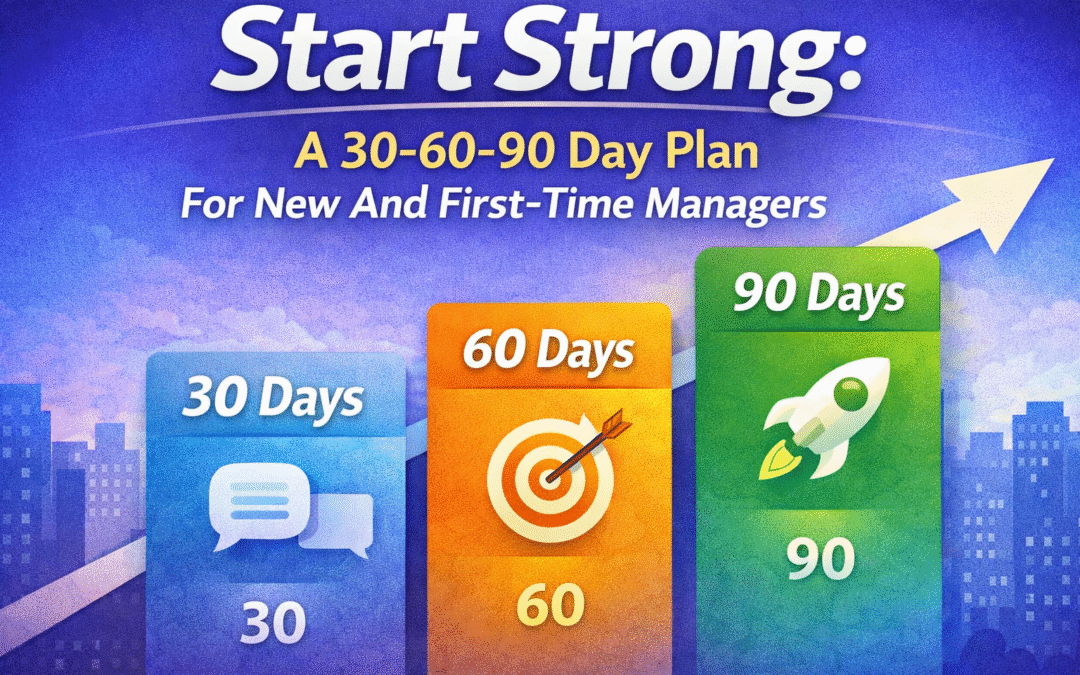
Think of your first 3 months as 3 clear phases. You are learning, aligning, then improving.
Days 1 to 30: Learn and listen
- Meet everyone on your team. Ask what is working, what feels hard, and what would make their work easier.
- Map responsibilities, skills, and current priorities. Note any risks around workload, wellbeing, or compliance.
- Understand key processes, targets, and the wider plan for the year. Get curious before changing anything.
- Quick win: Tidy communication loops. Confirm who needs what information, and when, to reduce confusion.
Days 31 to 60: Align and set expectations
- Share your draft team norms. Agree how you will plan work, communicate updates, and make decisions.
- Introduce a simple 1:1 rhythm and feedback approach. Keep it consistent and useful.
- Close small gaps. Remove blockers, clarify ownership, and document decisions in plain English.
- Quick win: A visible board or tracker for priorities, deadlines, and owners.
Days 61 to 90: Improve and embed
- Run a short review of what you have learned. What will you stop, start, and continue?
- Begin 1 or 2 targeted improvements, for example a streamlined rota, clearer handovers, or a light touch performance check-in.
- Celebrate progress. Name what the team has achieved, and why it mattered.
What is the 30-60-90 rule for managers?
It is a way to structure your first 3 months so you do not rush into change without context. You listen first, align second, then improve with your team. It keeps people at the centre while still delivering results.
Set team norms and expectations early
Norms are the invisible rules that shape how work gets done. Make them visible.
- Ways of working: Agree response times, channels, and how to flag urgent vs non-urgent work.
- Priorities: Define what good looks like this quarter, and how you will measure progress.
- Meetings: Keep them short with clear purpose and outcomes. Cancel if there is no need.
- Decision making: Be clear on who decides, who is consulted, and how you will record choices.
- Time off and cover: Share non-negotiables early, and set fair rules for clashes. Put it in writing.
A short team session in your first 45 days to co-create these norms sets a steady tone. You get fewer surprises, fewer misunderstandings, and better focus.
Build trust with regular 1:1s and practical feedback
Trust is built in small, consistent moments. The simplest habit is a regular 1:1.
Try this 5-question structure:
- What went well recently, and what made the difference?
- What felt hard, and what did you learn?
- Where do you want to grow next, and what support would help?
- What should we start, stop, or continue as a team?
- What is 1 action you will take before our next check-in?
Keep notes, follow up on promises, and close loops. Use everyday feedback that is specific, timely, and kind. Describe the behaviour you saw, the impact it had, and what good looks like next time. Do it often, not just at review points.
Can a manager be a coach?
Yes, within your role. You are still responsible for performance and decisions, yet you can use coaching skills to help people think clearly and find solutions. Ask open questions, listen well, and guide rather than rescue every time. This builds capability and ownership across your team.
Is one-on-one coaching worth it?
For many new managers, yes. Personal coaching speeds up self-awareness, helps you untangle sticky situations, and gives you space to practise hard conversations. If you want focused support close to real work, it is one of the fastest ways to grow confidence and skill.
Balance quick wins with long-term changes
Quick wins matter because they show you can make a difference without disruption. Good candidates include:
- Fixing a nagging process gap, for example a missing template or unclear handover.
- Improving visibility of priorities with a simple tracker.
- Tidying meeting habits, removing duplication, and shortening updates.
Long-term changes need buy-in and pacing. Choose 1 or 2, and involve the team in shaping them. Examples:
- A refreshed performance conversation approach with clear goals and check-ins.
- A fair, documented rota or leave process that protects cover and wellbeing.
- A skills plan that pairs learning with real work.
Avoid the trap of 10 initiatives at once. Pick the few that matter most, test them, and iterate.
What training is best for managers?
The best training meets you where you are, is practical, and ties directly to day-to-day situations. Look for:
- Real-play practice: Work with your real scenarios rather than generic role play.
- UK employment law basics in plain English, so you stay compliant while being human.
- Coaching skills for managers, so you can ask better questions and build ownership.
- Difficult conversations, feedback, and conflict skills that you can use the same day.
If you are local and want something hands-on, our interactive sessions keep theory light and application heavy. You leave with phrases, checklists, and a plan you can use immediately.
How RBM’s manager coaching accelerates confidence
I work with new and first-time managers across Lincolnshire to build calm, capable leadership. My approach is straightforward, personal, and grounded in UK employment law. Together we:
- Clarify your 30-60-90 plan with people-first milestones.
- Set team norms you can explain simply and apply consistently.
- Practise the tricky bits, including feedback, boundaries, and difficult conversations.
- Build everyday coaching habits, so you grow your team while delivering results.
If you prefer local support, you can explore options like leadership training or tailored manager training depending on where your team is based. If your priority is strengthening people skills, our coaching skills for managers programmes help you put coaching into daily practice. Choose what fits, and we will tailor it to your context.
Your 90-day starter checklist
- Book 1:1s with every direct report and keep them regular.
- Map responsibilities, priorities, and risks. Close obvious gaps quickly.
- Co-create team norms and write them down.
- Share a visible plan for the quarter with owners and dates.
- Give small, specific feedback every week.
- Pick 1 or 2 long-term improvements and involve the team in the design.
- Celebrate progress and keep communication clear.
Ready to start strong?
You do not need to do everything at once. Use the 30-60-90 shape to learn, align, then improve with your team. Focus on people first, keep communication clear, and build trust through regular 1:1s and practical feedback.
If you want a head start, I offer RBM’s manager coaching, tailored training, and one-to-one support to fit your goals. Book a tailored coaching package or an all-day skills workshop, and we will shape it around your real situations. If you are nearby, explore new manager training in Lincolnshire or HR consultancy for SMEs in Lincolnshire to see what is possible, then get in touch to plan your next step.